DiseñoDesign
Diez principios para un buen diseñoTen principles for good design
Una reflexión sobre los objetos que conservan su sentido cuando la novedad pasa, a partir de los principios de Dieter Rams.A reflection on objects that remain meaningful after the novelty fades, starting from Dieter Rams’s principles.
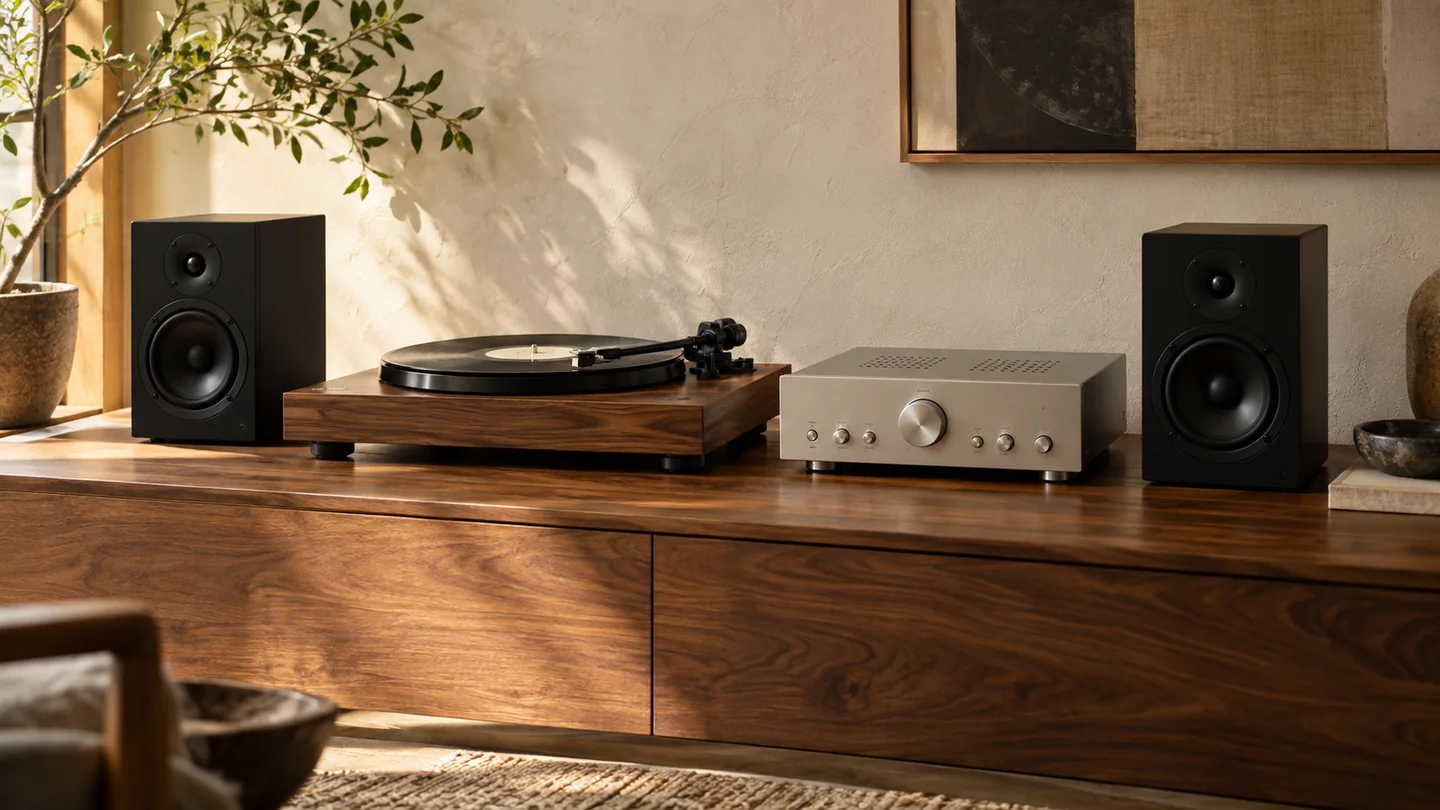
Algunos objetos se entienden en la primera mirada. A otros les tomamos cariño después de usarlos: por cómo se sienten en la mano, por el lugar que nos ayudan a ordenar o porque siguen funcionando cuando todo alrededor cambia.
¿Qué hace que un objeto siga teniendo sentido después de que desaparece la novedad?
A finales de los años setenta, Dieter Rams formuló diez principios para pensar el buen diseño. No son reglas definitivas; el propio diseñador reconoció que esa idea cambia con la cultura y la tecnología. Aquí los tomamos como una herramienta para observar los objetos, el mobiliario y los espacios que conviven con la música.
El buen diseño innova
Innovar puede ser encontrar una unión más sencilla, aprovechar mejor un tablero o hacer que una pieza resulte más fácil de fabricar. También puede cambiar la manera de usarla.
La pregunta es qué mejora. Un proceso nuevo tiene sentido cuando resuelve una dificultad real; sumar funciones por el gusto de sumarlas puede añadir trabajo al usuario. Una pieza no necesita parecer futurista para ofrecer una solución distinta.
El buen diseño es útil
La utilidad se reconoce al acercarse al objeto. En una repisa, por ejemplo, importa que los discos quepan, pero también que puedan salir sin atorarse, que el apoyo sea estable y que limpiar no se vuelva una tarea incómoda.
Ergonomía, almacenamiento, mantenimiento y facilidad de uso pertenecen a la misma decisión. Una forma atractiva pierde sentido si obliga a sortearla cada vez que queremos hacer algo sencillo.
El buen diseño es estético
La belleza puede estar en la relación entre una superficie y sus apoyos, en el espesor de un canto o en cómo la madera recibe la luz. Surge de la proporción, la escala y la construcción, sin necesitar una capa de ornamentación. Cuando un objeto acompaña nuestra vida durante años, su presencia también forma parte de lo que habitamos.
El buen diseño hace comprensible un objeto
Una abertura puede sugerir dónde tomar una pieza. Un apoyo puede indicar dónde colocarla. La disposición de los componentes puede ayudar a entender cómo se ensambla.
Las instrucciones tienen su lugar, especialmente para un montaje seguro. Pero cuando cada gesto cotidiano exige una explicación, conviene revisar si la forma está ayudando. La claridad también se diseña.
El buen diseño es discreto
En un espacio de escucha ya suceden muchas cosas: una portada atrae la vista, alguien elige el siguiente disco, la música cambia la conversación. El mobiliario puede dar lugar a todo eso sin reclamar continuamente el primer plano.
Para FORMMA, esa discreción es una forma de acompañar. La pieza organiza y sostiene; después permite que atendamos a la música y a las personas.
El buen diseño es honesto
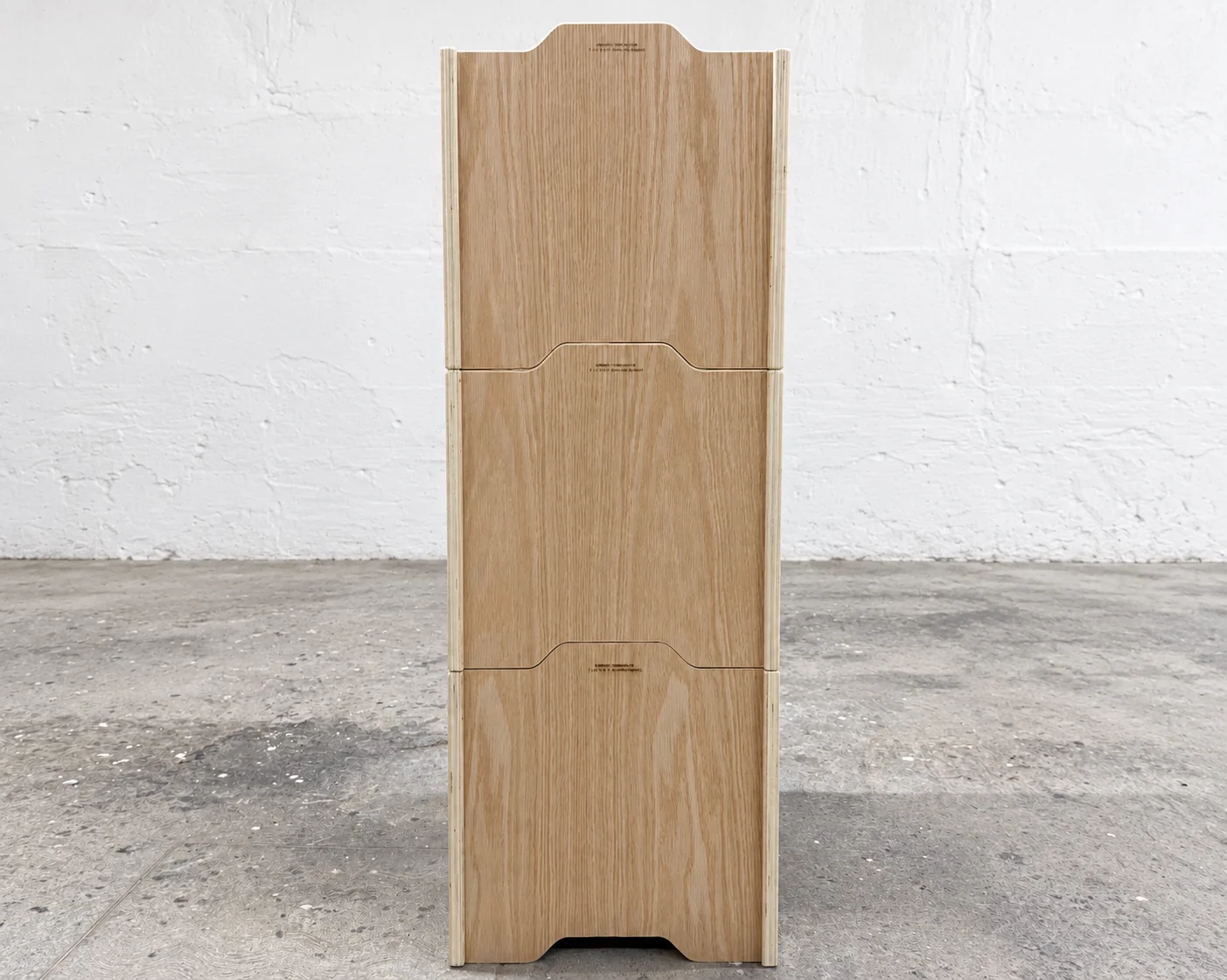
Un material debería poder presentarse como lo que es. El canto del triplay puede mostrar sus capas; una unión puede explicar cómo se sostiene la estructura. Elegir qué dejar visible forma parte del diseño, sin necesidad de disfrazar la construcción.
La honestidad alcanza también a lo que decimos del objeto: qué soporta, cómo se fabrica y qué cuidados necesita. Sus capacidades deben poder comprobarse, no depender de una promesa.
El buen diseño está hecho para durar
Durar tiene una parte física: resistir el uso, conservar la estabilidad y permitir el cuidado. Tiene también una parte menos fácil de medir: seguir encontrando lugar cuando cambia la casa.
Una pieza puede convivir con otro sillón, una colección más grande o una habitación distinta. Pensar en esos cambios ayuda a diseñar más allá de la fotografía del primer día.
El buen diseño cuida los detalles
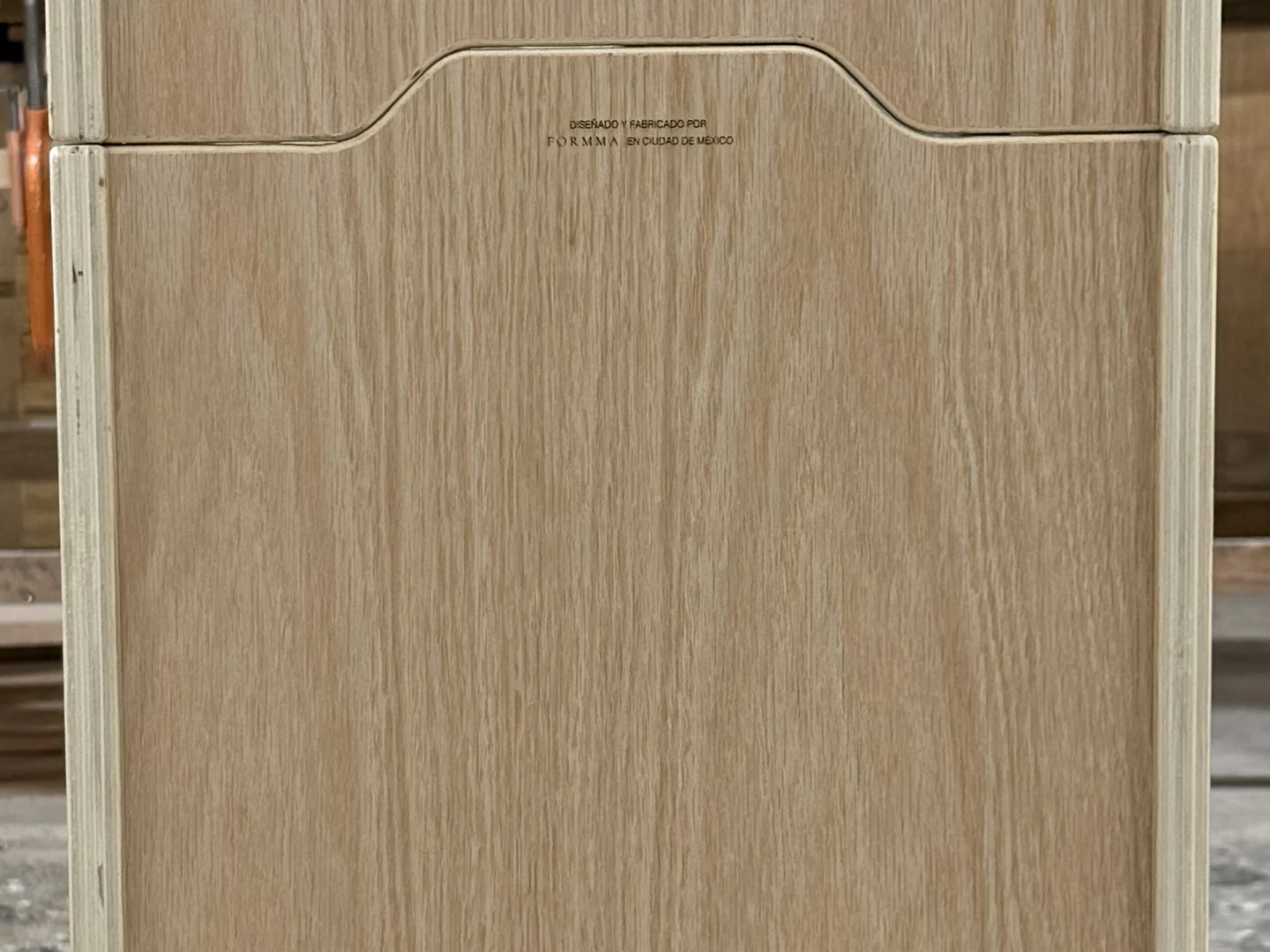
Un canto que toca la mano, un herraje que queda al alcance, una unión que ajusta bien. Los detalles son lugares donde el diseño se encuentra con el cuerpo y con la fabricación.
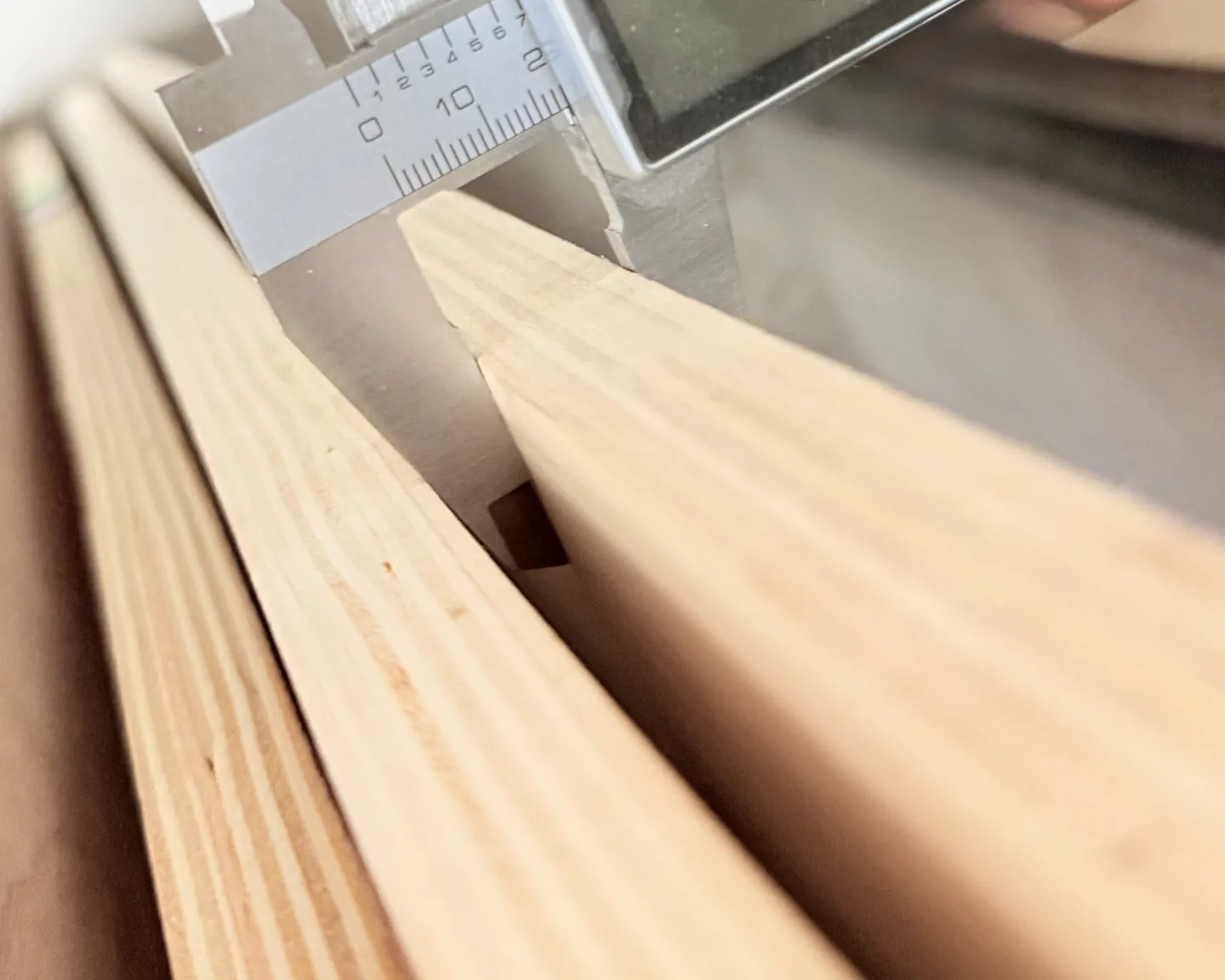
También incluyen tolerancias, superficies, proporciones y la secuencia de montaje. En una pieza simple, una diferencia pequeña se vuelve visible con facilidad. La precisión permite que el objeto se use sin tener que pensar en cada una de esas decisiones.
El buen diseño considera su impacto
El principio medioambiental de Rams invita a mirar la vida completa del objeto. Hoy eso implica preguntar cuánto material requiere, qué desperdicio produce y qué ocurre cuando una parte se daña.
La duración, la posibilidad de reparación, los procesos, el embalaje y el transporte merecen decisiones concretas. Ningún material resuelve esas preguntas por sí solo.
Para FORMMA, se trata de una responsabilidad que debe orientar el trabajo y poder documentarse. Una intención necesita hechos antes de convertirse en una afirmación sobre el producto.
El buen diseño es tan poco diseño como sea posible
Reducir comienza con una pregunta: ¿esto es necesario?
Una pieza, una unión, una función o un gesto deberían tener una razón para estar ahí. Quitar algo exige entender qué hacía: sostener, proteger, permitir un movimiento o volver legible el conjunto. Eliminar sin revisar esas relaciones puede hacer el objeto más pobre.
Si un elemento puede desaparecer sin afectar el funcionamiento ni la experiencia, quizá ya cumplió su papel durante el proceso. La simplicidad aparece después de probar, ajustar y elegir. No basta con que una forma se vea vacía.
Diseñar alrededor de la música
En FORMMA, pensar un espacio de escucha comienza por reconocer qué queremos que ocurra en él. El mobiliario puede organizar la colección, sostener el equipo, protegerlo de golpes cotidianos y dejar lugar para usarlo.
Eso exige proporción, resistencia adecuada al uso, fabricación precisa y claridad sobre los materiales. También exige observar cómo una persona se acerca, busca un disco y vuelve a guardarlo. La permanencia se construye con esas decisiones; la simplicidad tiene que servirlas.
Después, el mueble puede quedarse en su lugar sin pedir más atención. La música ocupa el centro.
Quizá ahí permanece la fuerza de estos principios: invitan a pensar lo suficiente para distinguir qué aporta cada decisión y qué podemos dejar fuera. Hasta que lo que queda tiene una razón para acompañarnos.
FORMMA
Spaces shaped by listening.
El punto de partida
Los diez principios pertenecen a Dieter Rams. Los títulos se presentan en una adaptación al español; el desarrollo de cada bloque es una lectura editorial de FORMMA. En el noveno, “considerar su impacto” amplía la formulación medioambiental original.
Some objects make sense at first sight. Others earn our affection through use: by the way they feel in the hand, the place they help us organize or because they keep working as everything around them changes.
What makes an object remain meaningful after the novelty has faded?
In the late 1970s, Dieter Rams formulated ten principles for thinking about good design. They are not definitive rules; the designer himself recognized that this idea changes with culture and technology. Here we use them as a way to observe objects, furniture and spaces that live alongside music.
Good design innovates
Innovation can mean finding a simpler joint, making better use of a board or making a piece easier to manufacture. It can also change how we use it.
The question is what improves. A new process makes sense when it solves an actual difficulty; adding functions for their own sake can give users more work. A piece does not need to look futuristic to offer a different solution.
Good design is useful
Usefulness becomes apparent when we approach an object. On a shelf, for example, records need to fit, but they should also come out without catching, the support should be stable and cleaning should not become an awkward task.
Ergonomics, storage, maintenance and ease of use belong to the same decision. An attractive shape loses its purpose if we have to work around it whenever we want to do something simple.
Good design is aesthetic
Beauty can lie in the relationship between a surface and its supports, the thickness of an edge or how wood receives light. It emerges from proportion, scale and construction without needing a layer of ornament. When an object accompanies us for years, its presence becomes part of the space we inhabit.
Good design makes an object understandable
An opening can suggest where to hold a piece. A support can indicate where to place it. The arrangement of components can help explain how it goes together.
Instructions have their place, especially for safe assembly. But when every everyday gesture requires an explanation, it is worth checking whether the form is helping. Clarity is designed too.
Good design is discreet
Much is already happening in a listening space: a cover catches the eye, someone chooses the next record, music changes the conversation. Furniture can make room for all of it without constantly claiming the foreground.
For FORMMA, this discretion is a way of accompanying everyday life. The piece organizes and supports, then lets us attend to the music and the people.
Good design is honest
A material should be able to present itself as what it is. A plywood edge can show its layers; a joint can explain how the structure holds together. Choosing what remains visible is part of design, without needing to disguise the construction.
Honesty extends to what we say about the object: what it supports, how it is made and what care it needs. Its capabilities should be verifiable, rather than depend on a promise.
Good design is made to last
Lasting has a physical side: withstanding use, retaining stability and allowing care. It also has a side that is harder to measure: continuing to find a place as the home changes.
A piece can live with another sofa, a larger collection or a different room. Thinking about those changes helps us design beyond the photograph of the first day.
Good design takes care of details
An edge that touches the hand, a fitting within reach, a joint that fits well. Details are places where design meets the body and the manufacturing process.
They also include tolerances, surfaces, proportions and the sequence of assembly. In a simple piece, a small difference becomes visible easily. Precision lets us use the object without thinking about each of those decisions.
Good design considers its impact
Rams's environmental principle invites us to consider an object's entire life. Today, that means asking how much material it requires, what waste it produces and what happens when a part is damaged.
Longevity, the possibility of repair, processes, packaging and transport deserve concrete decisions. No material answers those questions on its own.
For FORMMA, this is a responsibility that should guide the work and be documented. An intention needs facts before becoming a claim about a product.
Good design is as little design as possible
Reduction begins with a question: is this necessary?
A component, a joint, a function or a gesture should have a reason to be there. Removing something requires understanding what it did: supporting, protecting, allowing movement or making the whole legible. Eliminating it without considering those relationships can leave the object poorer.
If an element can disappear without affecting function or experience, perhaps it has already served its purpose during the process. Simplicity emerges after testing, adjusting and choosing. A shape that merely looks empty is not enough.
Designing around music
At FORMMA, thinking about a listening space begins with recognizing what we want to happen there. Furniture can organize the collection, support the equipment, protect it from everyday knocks and leave room to use it.
This calls for proportion, strength suited to use, precise manufacturing and clarity about materials. It also calls for observing how a person approaches, searches for a record and puts it away again. Lasting relevance is built through those decisions; simplicity has to serve them.
Afterwards, the furniture can stay in its place without asking for more attention. Music takes the center.
Perhaps this is where the principles retain their strength: they invite us to think enough to distinguish what each decision contributes and what we can leave out. Until what remains has a reason to accompany us.
FORMMA
Spaces shaped by listening.
The starting point
The ten principles are Dieter Rams's. The headings are presented as editorial adaptations; the development of each section is FORMMA's own reading. In the ninth, “considering its impact” expands the original environmental formulation.