EquiposAudio
De la fuente al espacio: cómo construir un sistema de escuchaFrom source to space: how to build a listening system
Una ruta clara para elegir tornamesa, etapa de phono, amplificación y bocinas como un solo sistema.A clear route to choosing a turntable, phono stage, amplifier and speakers as one system.
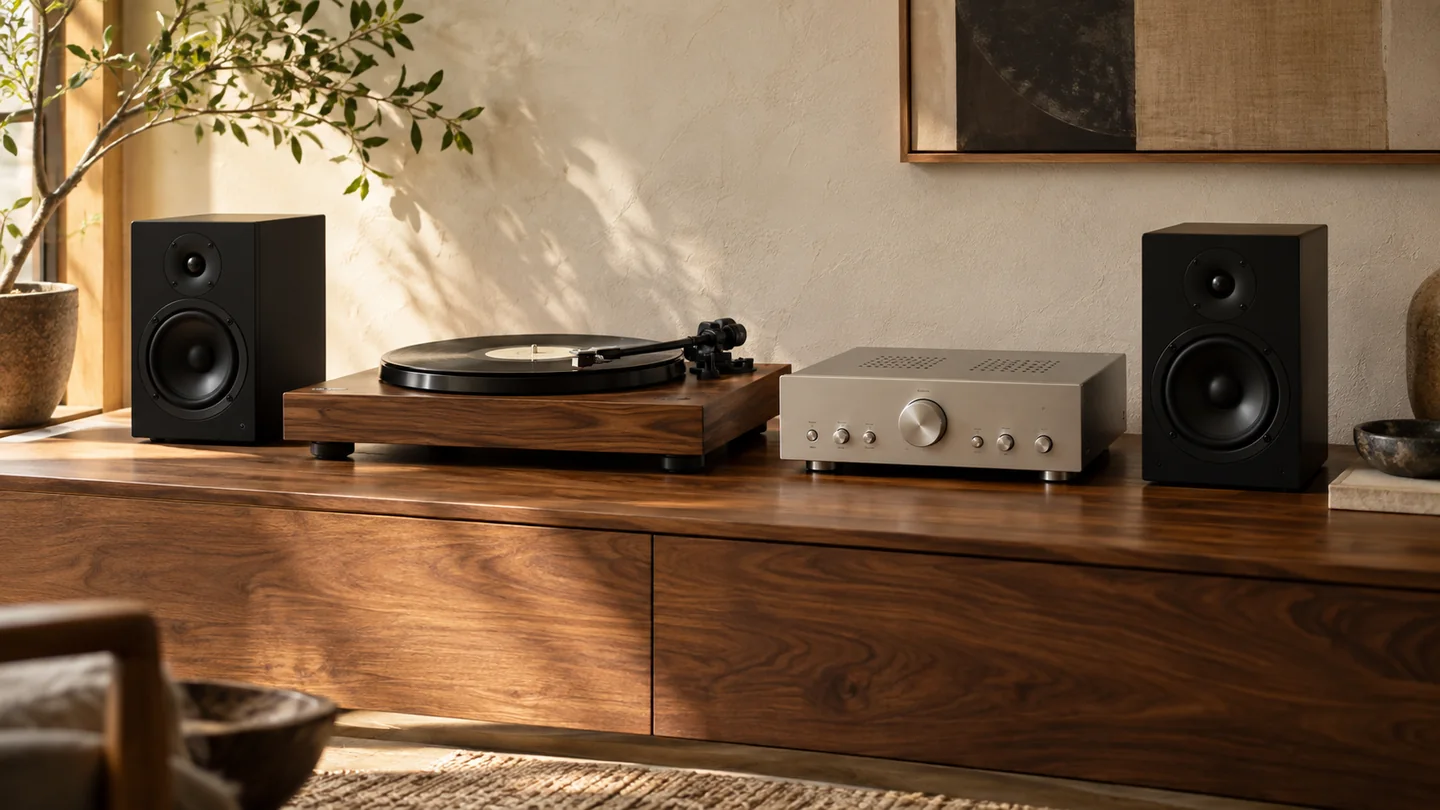
Un sistema de escucha funciona como una cadena: la fuente lee la música, la etapa de phono adapta la señal, el amplificador la controla y las bocinas la convierten en sonido dentro de una habitación real. Pensar el conjunto antes de comprar evita duplicar funciones y deja una ruta clara para crecer.
Una salida LINE ya incorpora phono preamp. Las bocinas activas ya incorporan amplificación.
Define el sistema antes de elegir componentes
Responde tres preguntas: ¿escucharás vinilos o también fuentes digitales?, ¿qué espacio real tienen las bocinas?, ¿prefieres pocos equipos o piezas que puedan cambiar por separado? De ahí surgen tres rutas válidas:
- Compacta: tornamesa con salida LINE y bocinas activas.
- Integrada: tornamesa, amplificador con entrada PHONO y bocinas pasivas.
- Modular: tornamesa, phono externo, amplificador y bocinas pasivas.
Fuente: tornamesa y cápsula
Busca estabilidad, velocidad correcta, operación clara y una aguja reemplazable. La transmisión por banda o directa importa menos que la ejecución del modelo, su ajuste y una base nivelada. Identifica también la salida: PHONO necesita una etapa de phono; LINE indica que ya existe una dentro de la tornamesa.
La cápsula debe ser compatible con la entrada de phono. MM es habitual en sistemas domésticos; MC suele requerir una entrada y ganancia específicas. Fuerza de apoyo, antiskating y alineación deben seguir el manual del fabricante.
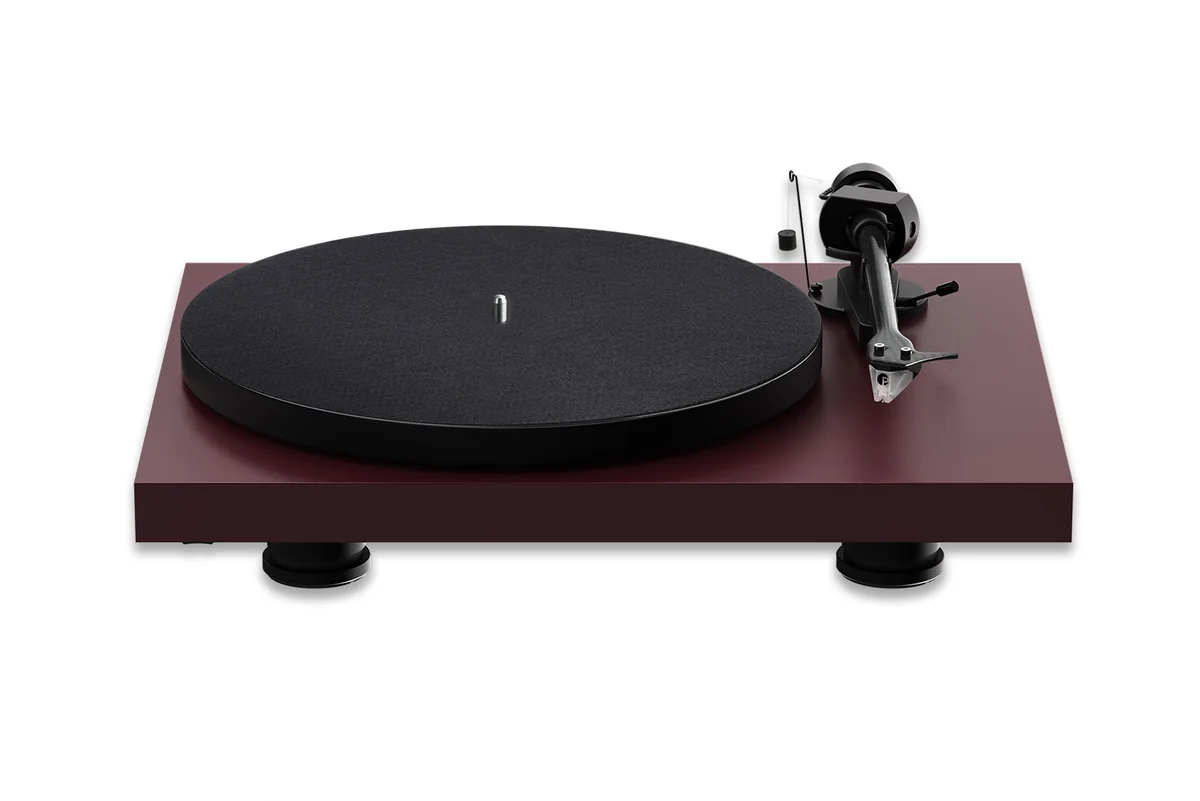
Referencia de tornamesa manual con transmisión por banda y soporte desacoplado.
Ver referencia oficial ↗
Ejemplo visual de una cápsula MM con aguja reemplazable.
Ver referencia oficial ↗Phono y amplificación: una función, una sola vez
La señal de la cápsula es mucho menor que una señal de línea. El phono preamp añade ganancia y aplica la ecualización RIAA; puede estar dentro de la tornamesa, del amplificador o en una caja externa. No debe duplicarse. Si aparece zumbido, revisa primero tierra, cableado y ubicación.
Para bocinas pasivas, el amplificador debe admitir su impedancia y ofrecer las entradas que usarás. Los watts aislados dicen poco: compatibilidad, ventilación y margen limpio importan más que perseguir la cifra más alta.
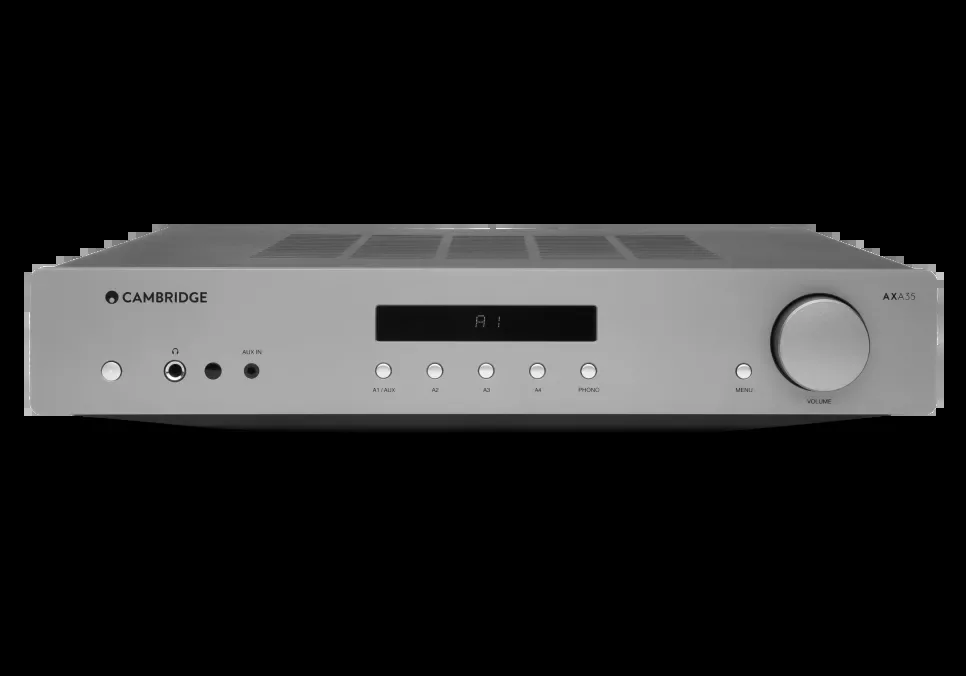
Ejemplo de amplificador integrado con etapa de phono MM incorporada.
Ver referencia oficial ↗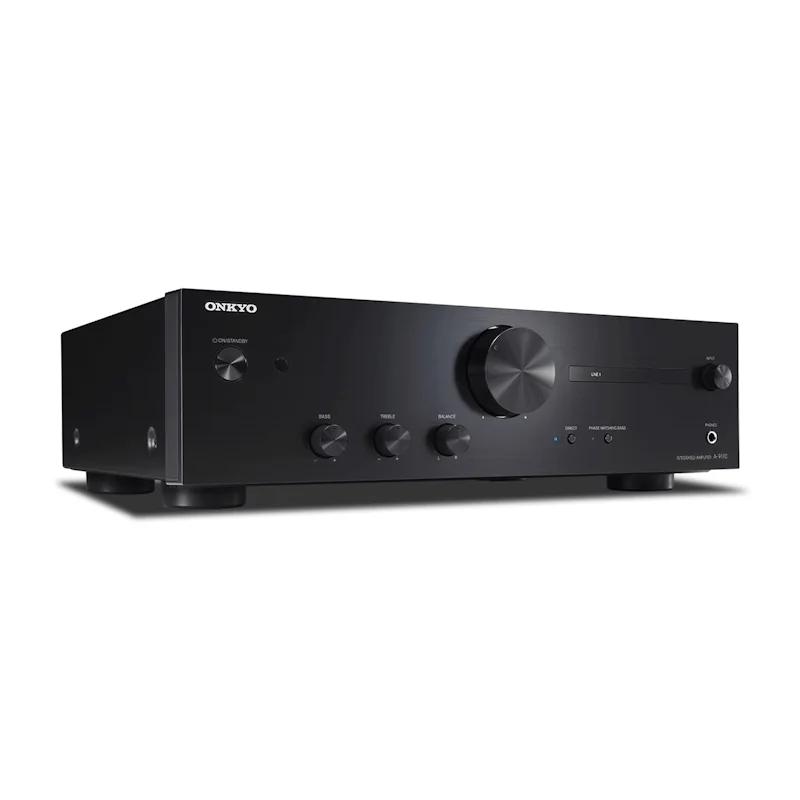
Referencia de amplificador integrado con chasis rígido y entrada phono.
Ver referencia oficial ↗Bocinas: el sistema se encuentra con la sala
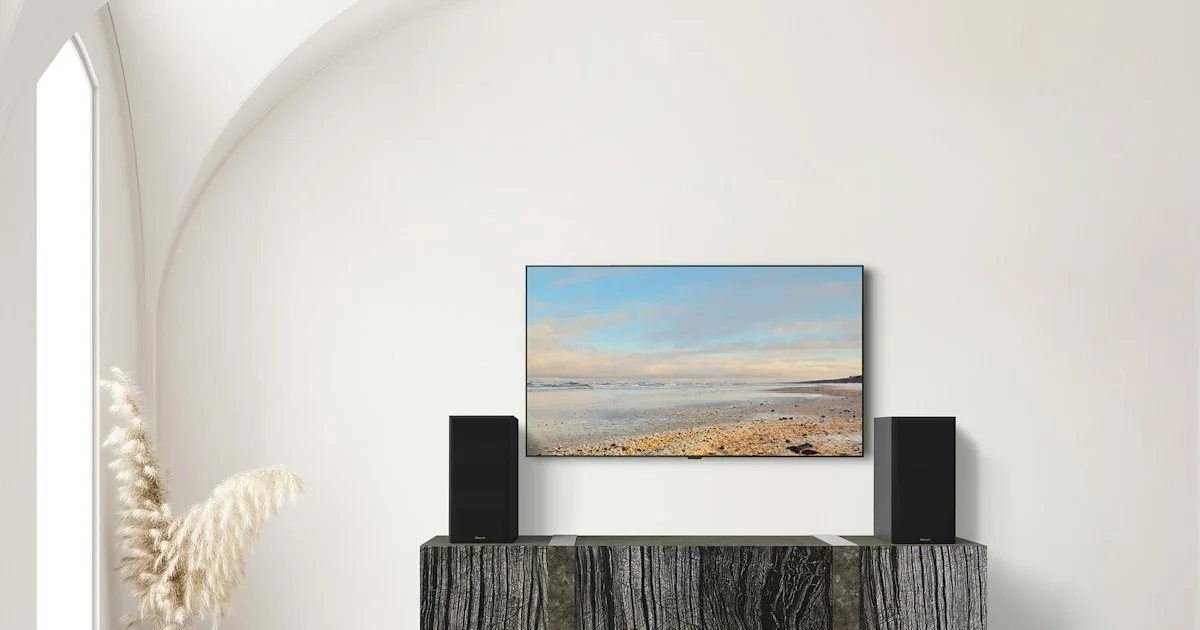
Elige tamaño y tipo según distancia de escucha, volumen habitual y posibilidades de colocación. Las bocinas activas incorporan amplificación; las pasivas necesitan una externa. Empieza con ambas a igual altura y distancia, orientadas hacia el punto de escucha, y ajusta en pasos pequeños.
El mueble también forma parte del sistema
Una tornamesa es sensible al movimiento mecánico. Una base sólida, firme y nivelada ayuda a reducir vibraciones transmitidas por pasos, golpes accidentales, puertas o cajones; también disminuye el riesgo de saltos y realimentación. Si hay problemas, evita colocar las bocinas sobre la misma superficie que la tornamesa.
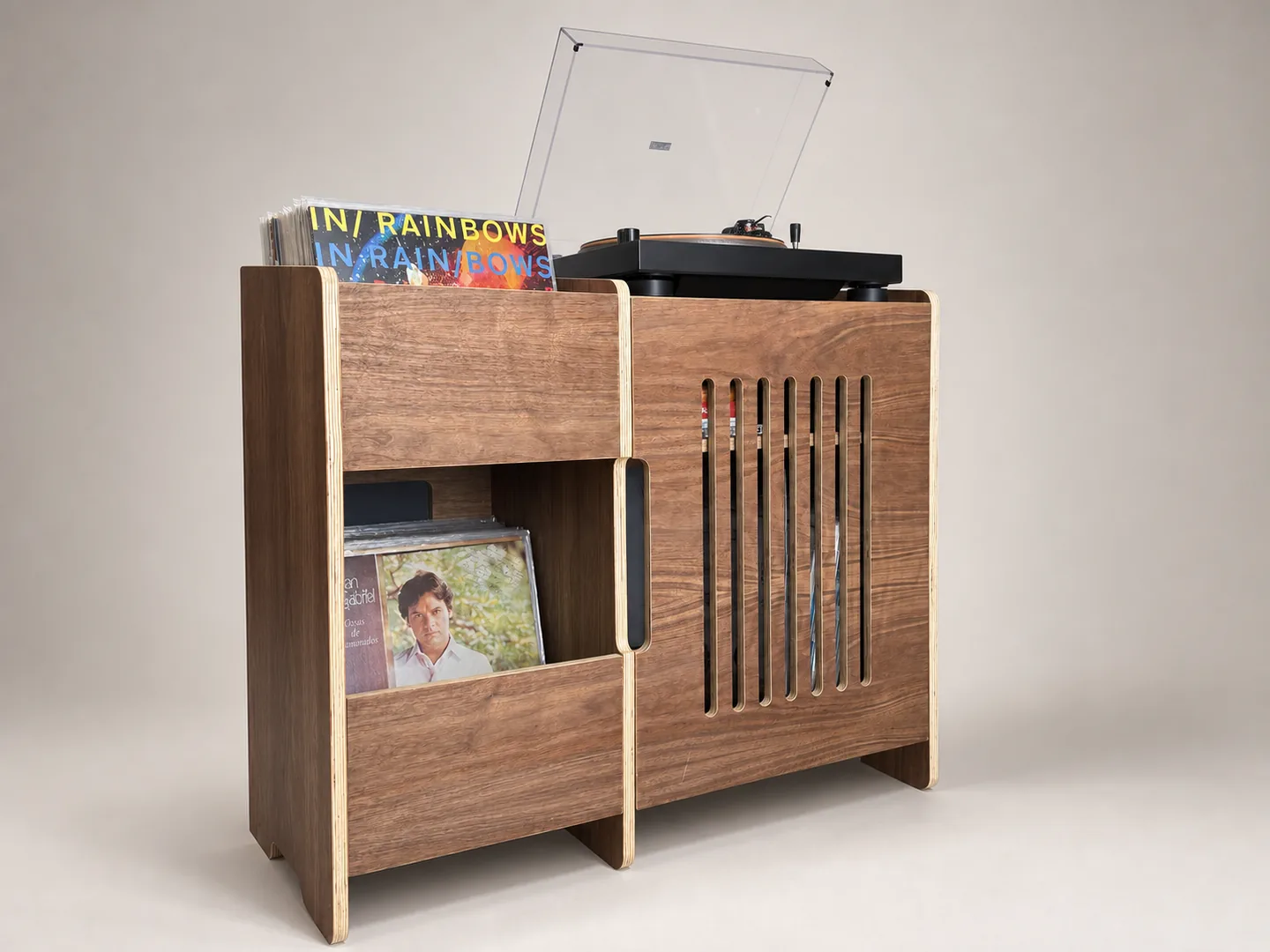
El mueble debe sostener el peso sin balancearse, permitir nivelación y dejar ventilación alrededor del amplificador. Si buscas reunir una tornamesa y discos, puedes comparar Allegro, un mueble para tocadiscos y vinilos, con Sonata, para un sistema de audio más completo. Revisa el espacio útil y los requisitos de ventilación de tus aparatos: el mueble debe acompañar al sistema, no obligarte a acomodarlo a presión.
Una lista breve antes de pagar
- Existe una sola etapa de phono activa y es compatible con la cápsula.
- El amplificador admite la impedancia de las bocinas y puede ventilar.
- Hay entradas suficientes para las fuentes que realmente usarás.
- Las bocinas pueden colocarse con altura y distancia equivalentes.
- La tornamesa tendrá una base firme, estable y nivelada.
Las marcas y modelos mostrados son referencias visuales para reconocer cada etapa del sistema; no forman una lista cerrada ni una clasificación de compra.
Fuentes de referencia
A listening system works as a chain: the source reads the music, the phono stage prepares the signal, the amplifier controls it and the speakers turn it into sound inside a real room. Thinking about the whole before buying avoids duplicated functions and leaves a clear path for growth.
A LINE output already contains a phono stage. Active speakers already contain amplification.
Define the system before choosing components
Answer three questions: will you play records or digital sources too, how much real placement space do the speakers have, and do you prefer fewer boxes or components that can change independently? Three sound routes follow:
- Compact: turntable with LINE output and active speakers.
- Integrated: turntable, amplifier with PHONO input and passive speakers.
- Modular: turntable, external phono stage, amplifier and passive speakers.
Source: turntable and cartridge
Look for stability, correct speed, clear operation and a replaceable stylus. Belt or direct drive matters less than execution, setup and a level support. Identify the output too: PHONO needs a phono stage; LINE means one is already active inside the turntable.
The cartridge must match the phono input. MM is common in domestic systems; MC usually requires a specific input and gain. Follow the maker's instructions for tracking force, antiskate and alignment.
A manual belt-drive turntable with decoupled support.
Official reference ↗A visual example of an MM cartridge with a replaceable stylus.
Official reference ↗Phono and amplification: one function, once
The cartridge signal is far smaller than a line signal. A phono stage adds gain and applies RIAA equalisation; it can live in the turntable, amplifier or an external box. Do not duplicate it. If hum appears, check grounding, cables and location first.
For passive speakers, the amplifier must support their impedance and provide the inputs you will use. Watts in isolation say little: compatibility, ventilation and clean headroom matter more than the largest number.
An integrated amplifier with a built-in MM phono stage.
Official reference ↗An integrated amplifier with a rigid chassis and phono input.
Official reference ↗Speakers: where the system meets the room
Choose type and size from listening distance, normal volume and placement options. Active speakers contain amplification; passive speakers need an external amplifier. Begin with both at equal height and distance, aimed toward the listening position, then adjust in small steps.
Furniture is part of the system too
A turntable is sensitive to mechanical movement. A solid, firm and level base helps reduce vibration from footsteps, accidental knocks, doors or drawers; it also lowers the risk of skipping and feedback. When vibration is a problem, avoid placing speakers on the same surface as the turntable.
Furniture should carry the load without rocking, allow levelling and preserve airflow around the amplifier. To bring a turntable and records together, compare Allegro turntable and vinyl furniture with Sonata for a more complete audio system. Check the usable space and your equipment’s ventilation requirements: furniture should accompany the system rather than force everything into a tight fit.
A short checklist before paying
- There is exactly one active phono stage and it matches the cartridge.
- The amplifier supports speaker impedance and can ventilate.
- There are enough inputs for the sources you will actually use.
- The speakers can sit at equivalent height and distance.
- The turntable will have a firm, stable and level base.
The brands and models shown are visual references for recognising each stage; they are not a closed list or a purchase ranking.